Gianni Infantino scraps FIFA Private Investment Proposal
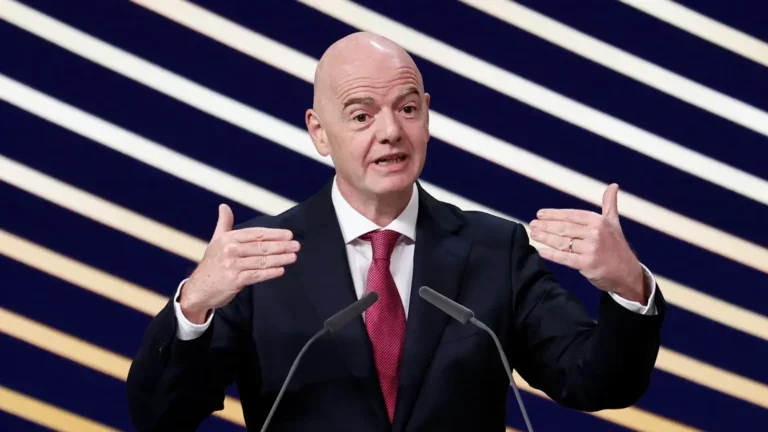
FIFA has officially withdrawn its proposed private investment scheme for the FIFA World Cup after intense criticism from football confederations, national associations and governance officials forced a dramatic U-turn by president Gianni Infantino.
The governing body confirmed on Saturday that the project would not proceed, ending one of the most controversial episodes of Infantino’s presidency less than a week after the proposal became public.
“Our purpose has always been, and will always be, to unite and improve,” Infantino said in a statement. “As a result, this proposal will not proceed.”
What FIFA had proposed
FIFA unveiled the plan on Tuesday as part of a new commercial structure called FIFA Forward Enterprise (FFE), which would manage business operations related to competitions such as the World Cup and the expanded Club World Cup.
The organisation said the initiative could raise up to $4.2 billion based on an estimated valuation of $20 billion for the new subsidiary. FIFA also argued that the project would increase financial support for its 211 member associations, including:
- A one-off payment of $20 million to each association in early 2027.
- An increase in development funding for the 2027-2030 cycle from $8 million to $20 million per association.
UEFA leads the opposition
The strongest resistance came from UEFA, which warned that football’s flagship tournament should never be treated as a commercial asset available for private ownership.
The European governing body stated that the World Cup was “not for sale” and signalled that its member associations would refuse to participate in FIFA competitions if the proposal remained active.
That public stance significantly increased pressure on FIFA and helped turn the issue into a broader governance crisis rather than a purely financial debate.
AFC, CONCACAF and CONMEBOL raise concerns
Opposition quickly spread beyond Europe. The Asian Football Confederation (AFC) and CONCACAF criticised the process, arguing that any proposal capable of reshaping global football should be discussed openly with confederations and member associations before being announced publicly.
Even CONMEBOL, whose president Alejandro Dominguez is considered politically close to Infantino, requested detailed information about the structure, governance and long-term consequences of the plan.
The breadth of the criticism left FIFA increasingly isolated.
Senior FIFA Adviser resigns
The controversy intensified further on Friday when senior adviser Carlos Cordeiro resigned and publicly condemned the proposal, describing it as harmful to member associations and the future of football.
His departure was widely interpreted as evidence that concerns existed not only among external stakeholders but also within FIFA’s own leadership circle.
Why critics objected
Opponents argued that FIFA, which already possesses substantial financial reserves and expects record revenues from the 2026 World Cup, had not adequately explained why private capital was necessary.
They also feared that external investors could eventually push for:
- Larger tournaments.
- More frequent competitions.
- Greater commercial exploitation of international football.
The central argument was that governance of the sport should remain independent of investor influence.
Infantino admits the plan became divisive
In his statement announcing the withdrawal, Infantino acknowledged that the proposal had created damaging divisions within world football.
“Having listened carefully to all the views, it has become clear that the project has created divisions of a nature that are no longer in the interest of the objective set out in the first place,” he said.
He added that the initiative would only have moved forward if it had received broad support across the football community.
Political pressure also mounted
The backlash extended beyond football. European political figures criticised the proposal, and senior public officials in several countries questioned whether FIFA’s governance standards were being maintained.
The growing political scrutiny increased the reputational risk surrounding the project and made a retreat increasingly likely.
What happens next?
With the proposal abandoned, FIFA is now expected to focus on repairing relationships with confederations and member associations that felt excluded from the process.
The collapse of the plan has reopened wider questions about transparency, consultation and the commercial direction of international football under Infantino’s leadership.
For now, the immediate outcome is clear: FIFA’s attempt to bring private investors into the commercial structure of the World Cup has been shelved, and the governing body must now rebuild trust after one of the most turbulent weeks in modern football governance.

SportsLigue
Related Posts
What is the FIFA Peace Prize?
December 4, 2025