Embattled Gianni Infantino faces pressure after emergency FIFA crisis meeting
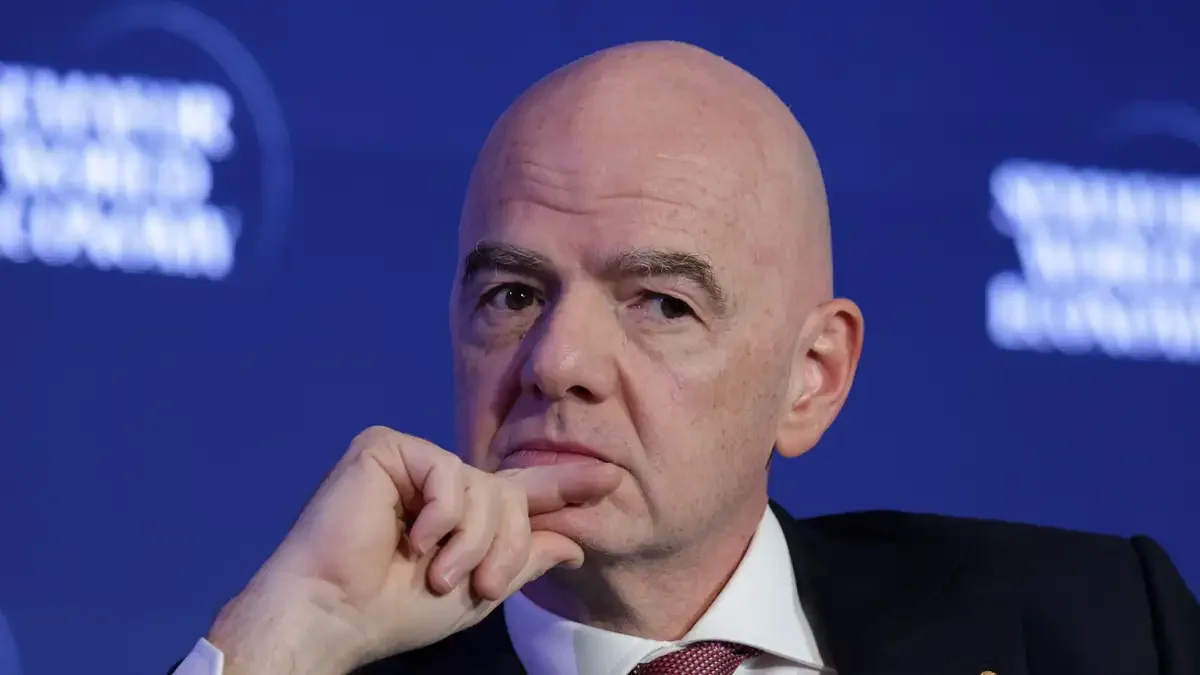
FIFA president Gianni Infantino has convened an emergency meeting with senior football executives in Morocco as the governing body attempts to contain the fallout from its abandoned World Cup private investment proposal.
The high-level discussions, held at FIFA's African regional office in Salé near Rabat, come just days after football's world governing body withdrew plans to establish the FIFA Forward Enterprise (FFE), a commercial subsidiary designed to manage major competitions, including the FIFA World Cup and FIFA Club World Cup.
The proposal, which was expected to attract private investors and generate billions of dollars for global football development, instead sparked one of the strongest political backlashes of Infantino's presidency.
FIFA's Commercial Proposal Sparks Global Backlash
FIFA initially argued that the new commercial structure could generate approximately $4.2 billion, valuing the proposed enterprise at around $20 billion.
Under the plan, each of FIFA's 211 member associations would have received a one-time payment of $20 million in early 2027, while annual development funding for the 2027-2030 cycle would increase significantly.
However, what FIFA presented as an ambitious financial reform quickly became one of the most controversial governance proposals in recent football history. The project drew criticism over concerns surrounding transparency, governance and the long-term commercial control of the World Cup, football's biggest global competition.
UEFA and CONCACAF turn up the pressure
The strongest criticism has come from UEFA, which described the proposal as an opaque deal lacking proper consultation with football stakeholders. European football's governing body questioned FIFA's leadership and suggested confidence in Infantino had significantly deteriorated following the episode.
Meanwhile, CONCACAF also issued a strongly worded response, calling for a broader review of FIFA's governance while expressing concern over the organisation's leadership and decision-making process.
The coordinated criticism from two of world football's most influential confederations has intensified scrutiny of Infantino's administration.
Internal FIFA concerns surface
The controversy deepened after an internal email from FIFA secretary-general Mattias Grafström was leaked. According to reports, Grafström described the handling of the proposal as a regrettable episode while reminding staff that FIFA's institutional responsibilities extend beyond individual leaders.
The leaked correspondence has fueled speculation that dissatisfaction exists within FIFA's own leadership structure, although the organisation has not publicly commented on the contents of the email.
Morocco remains a key ally
Despite mounting international criticism, Infantino continues to receive support from the Royal Moroccan Football Federation and its president Fouzi Lekjaa. Lekjaa praised FIFA's decision to withdraw the proposal, describing it as a move made in the interest of maintaining unity within world football.
Morocco has become one of FIFA's closest strategic partners after successfully hosting several major international events and securing co-hosting rights for the 2030 FIFA World Cup alongside Spain and Portugal.
The country will also host the 2027 FIFA Congress, where the next FIFA presidential election is scheduled to take place.
Future of Infantino Presidency under spotlight
Only weeks ago, Infantino appeared well positioned to secure another term as FIFA president following what many considered a successful 2026 FIFA World Cup across the United States, Canada and Mexico.
The failed investment proposal has dramatically altered that outlook.
With criticism now emerging from confederations, football administrators and within FIFA itself, attention is beginning to shift toward the 2027 presidential election.
Although no official challenger has declared a candidacy, recent developments have created uncertainty surrounding what was previously expected to be a straightforward re-election campaign.
For now, FIFA's leadership faces the immediate challenge of rebuilding trust while reassuring member associations that the organisation remains committed to transparency and responsible governance.

SportsLigue