Formula 1 confirms Rwanda Grand Prix in historic return to Africa in the 2030s

Formula 1 has announced a 10-year agreement to bring Grand Prix racing back to Africa, with Rwanda preparing to host a race at a purpose-built circuit near its capital, Kigali, in the early 2030s.
The announcement marks a significant step towards ending Africa's absence from the Formula 1 calendar, with the continent last hosting a championship race at the South African Grand Prix in 1993.
Rwanda's President Paul Kagame and Formula 1 president and chief executive Stefano Domenicali announced the agreement at an event in Kigali on Tuesday. However, an exact date for the inaugural race has not yet been confirmed.
“This partnership is long overdue,” Kagame said, describing the agreement as a milestone for African motorsport fans. He also expressed hope that Rwanda's entry could encourage other countries on the continent to host future races.
New circuit planned near Kigali
The proposed circuit will be constructed in Bugesera, approximately 40 kilometres from Kigali, close to an airport that is also under development. Formula 1 said the track would be designed to work with the surrounding natural landscape, using the area's hills and elevation changes to create a challenging layout for drivers.
Construction and preparations will be crucial to delivering the project, with the championship indicating that the circuit is expected to be completed in the early 2030s.
Domenicali described the agreement as a landmark moment for the sport, saying Rwanda's arrival would help Formula 1 reach fans across every inhabited continent.
The proposed race would also make Rwanda the first confirmed new host country since Qatar and Saudi Arabia joined the calendar in 2021.
Lewis Hamilton's African Grand Prix Ambition
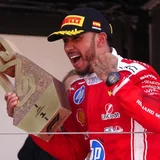
The announcement is particularly significant for seven-time world champion Lewis Hamilton, who has repeatedly expressed his desire to see Formula 1 return to Africa. Hamilton, the sport's only Black driver, has spoken about efforts to bring a race to the continent, describing it as a long-standing personal ambition.
An African Grand Prix would provide the championship with an opportunity to connect with a wider audience across a continent with a large and growing population of motorsport fans.
However, the race's eventual arrival will depend on the circuit project and the practical requirements of hosting a Formula 1 event.
Rwanda Targets Tourism and Economic Benefits
Rwanda views the proposed Grand Prix as part of a broader strategy to attract international investment, expand tourism and develop its sports infrastructure.
The country has invested in international sports partnerships, including sponsorship agreements with European football clubs and a relationship with the NBA. It has also hosted major sporting events, including the world cycling championships.
A Formula 1 race would bring global attention to Rwanda and could create opportunities for hospitality businesses, transport operators, suppliers and local workers.
Betty Mukamurenzi, a university information technology student in Kigali, told The Associated Press that international exposure could bring investment and employment opportunities, particularly for young people.
Businessman James Ruzindana also highlighted the need for local companies to improve their products and services to meet the expectations of international visitors.
Nevertheless, the scale of the economic benefits will depend on the investment required, the number of visitors attracted and how effectively local businesses participate in the event.
Human Rights Concerns Could Follow the F1 Spotlight
The agreement also raises questions about the scrutiny Rwanda may face as it prepares to join a global sporting calendar.
Human rights organisations have criticised Kagame's government over allegations of political repression. The United Nations has also accused Rwanda of supporting armed rebels in neighbouring Democratic Republic of Congo, allegations that have contributed to wider regional tensions.
Critics may question whether hosting a major sporting event risks improving the international image of a government facing such allegations, a practice often described as sportswashing.
For Formula 1, the challenge will be to balance its ambition to expand into new markets with questions about the political and human rights contexts of its host countries.
South Africa still hopes to return
Rwanda's announcement does not necessarily end South Africa's hopes of bringing Formula 1 back to the country.
South Africa has also pursued a return to the calendar, with proposals involving several potential venues. Sports, Arts and Culture Minister Gayton McKenzie congratulated Rwanda on its agreement while maintaining that South Africa could still secure a race before 2030.
McKenzie pointed to the precedent of Italy hosting more than one Grand Prix in a season, arguing that Africa's many countries should not be limited to a single race. Formula 1's announcement did not include a commitment to a South African event, leaving the country's plans uncertain.
Morocco has also explored a potential return to the championship. The country hosted its only Formula 1 World Championship Grand Prix in 1958, and a new circuit project was announced in 2025, although progress has remained unclear.
Africa's Complicated Formula 1 History
Formula 1's history in Africa has been closely associated with South Africa and the apartheid era. The championship faced criticism during the 1970s and 1980s over racing in a country governed by a system of institutionalised racial segregation. Some teams boycotted the 1985 South African Grand Prix amid growing international opposition and sanctions.
Formula 1 returned to the Kyalami circuit in 1992 and 1993 as South Africa moved towards democratic elections. The 1993 event remains the continent's most recent Formula 1 world championship race.
Rwanda's proposed Grand Prix would therefore represent more than a new addition to the calendar. It would mark the return of the championship to Africa after more than three decades, while introducing a new host country to the sport's global audience.
The 10-year agreement puts Rwanda in a strong position to pursue one of the continent's most ambitious motorsport projects. A successful Grand Prix could raise the country's international profile, attract visitors and create new commercial opportunities.
But the circuit must still be delivered, and the financial, logistical and operational requirements of hosting Formula 1 will be substantial.
For now, the agreement establishes a direction rather than a confirmed race date. If Rwanda meets those requirements, the early 2030s could mark a historic new chapter for Formula 1 and African motorsport.

SportsLigue