
What is VAR in football? Complete Guide to Video Assistant Referee
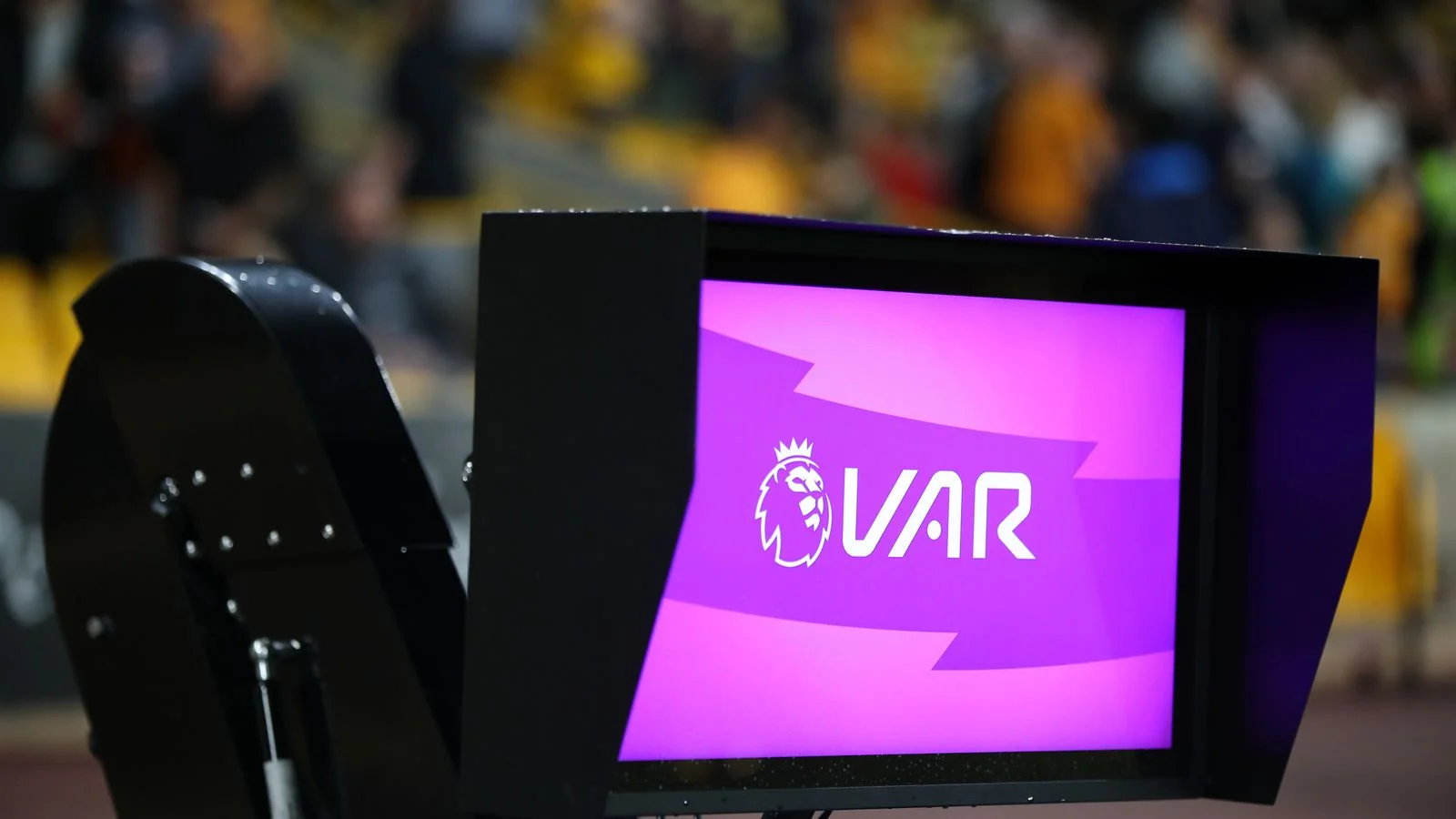
Video Assistant Referee (VAR) is a technology-based officiating system designed to help referees make more accurate decisions during football matches.
Rather than replacing the referee, VAR acts as an additional set of eyes, reviewing key incidents from multiple camera angles before advising the match official when a clear and obvious error may have occurred.
Today, VAR is used across many of football's biggest competitions, including the FIFA World Cup, UEFA Champions League, Premier League, La Liga, Bundesliga, Serie A, Ligue 1 and numerous domestic cup competitions around the world.
How does VAR work?
During every VAR-enabled match, a team of match officials operates from a dedicated Video Operations Room (VOR). The VAR team monitors every moment of the match using dozens of live camera feeds and slow-motion replays.
A typical VAR team includes:
- Video Assistant Referee (VAR)
- Assistant Video Assistant Referee (AVAR)
- Additional AVAR officials
- Replay Operator
Unlike some sports where coaches or players request reviews, football's VAR system constantly reviews play automatically. If the video officials believe the referee has made a significant mistake, they communicate through a headset and recommend a review.
The referee then has two options:
- Accept the VAR recommendation immediately.
- Review the footage personally on the pitchside monitor before making the final decision.
Importantly, the final decision always belongs to the on-field referee.
When can VAR be used?
VAR is deliberately limited to major match-changing incidents. It can only intervene in four situations:
1. Goals
VAR checks whether:
- The scorer was offside.
- A foul occurred during the attacking move.
- The ball crossed the goal line legally.
- Any infringement occurred before the goal.
Goals are never confirmed until the VAR check is complete.
2. Penalty Decisions
VAR reviews incidents involving:
- Possible fouls inside the penalty area.
- Handball offences.
- Simulations or dives.
- Incorrect penalty awards.
If necessary, the referee is invited to review the incident on the monitor.
3. Straight Red Cards
VAR only reviews direct red cards, not second yellow cards.
Officials determine whether:
- The challenge deserved a dismissal.
- The referee missed violent conduct.
- The wrong punishment was issued.
4. Mistaken Identity
If the referee books or sends off the wrong player, VAR can correct the error.
What is a "Clear and Obvious Error"?
One of the most misunderstood aspects of VAR is the phrase "clear and obvious error." VAR is not designed to re-referee every decision.
Instead, it intervenes only when there is convincing evidence that the original decision was clearly incorrect or when the referee completely missed a major incident.
This principle is intended to preserve the authority of the referee while reducing obvious mistakes.
What happens during a VAR review?
A typical VAR review follows several steps:
- Match incident occurs.
- VAR immediately checks the footage.
- Referee is informed if an error may have occurred.
- Referee either accepts VAR advice or reviews the footage.
- Final decision is announced.
- Play resumes.
Modern stadiums often display "VAR Check" or "VAR Review" messages on giant screens to keep supporters informed.
Why was VAR introduced?
Football has historically been criticised for controversial refereeing decisions that changed the outcomes of important matches. As television coverage improved, millions of viewers could instantly identify mistakes that referees had no chance of seeing in real time.
VAR was introduced to improve fairness by reducing obvious officiating errors without fundamentally changing football's flow.
The history of VAR
The idea for VAR originated in the Netherlands.
Key milestones include:
- 2010: Dutch FA launches the Refereeing 2.0 project.
- 2016: First live experimental matches using VAR.
- 2017: FIFA Confederations Cup becomes the first major international tournament with VAR.
- 2018: FIFA World Cup in Russia officially adopts VAR.
- 2019: Premier League introduces VAR.
- Today, VAR is widely used across elite football worldwide.
Its introduction at the 2018 World Cup marked one of the biggest changes to football officiating in modern history.
Advantages of VAR
VAR has produced several important benefits:
Improved Accuracy - Many incorrect goals, penalties and red cards have been overturned after video review.
Fairer Results - Critical mistakes that previously influenced tournaments can now be corrected.
Protection for Players - Violent conduct and dangerous tackles are more likely to be punished.
Greater Accountability -Every major decision can now be reviewed using multiple camera angles.
Criticisms of VAR
Despite its benefits, VAR remains controversial.
Some of the most common complaints include:
Long Delays - Lengthy reviews can interrupt the rhythm of matches.
Tight Offside Decisions - Fans often question offside calls involving only a few centimetres.
Inconsistent Decisions - Different referees sometimes interpret similar incidents differently.
Reduced Spontaneity - Supporters increasingly wait for VAR confirmation before fully celebrating goals.
Does VAR make football better?
Opinions remain divided. Supporters argue that correcting obvious mistakes is essential in a sport watched by billions.
Critics believe football loses some of its emotion when celebrations are delayed and matches frequently stop for reviews. Statistically, however, refereeing accuracy has improved significantly since VAR's introduction across major competitions.
While debates continue over its implementation, VAR has become an established part of elite football and is unlikely to disappear.
The Future of VAR
Football authorities continue refining the system.
Recent developments include:
- Semi-automated offside technology.
- Faster review procedures.
- Greater communication with fans inside stadiums.
- Improved referee training.
FIFA and IFAB continue evaluating ways to make reviews quicker, clearer and more consistent while preserving the game's flow.
VAR has fundamentally changed football officiating.
Although it remains one of the sport's most debated innovations, it has helped reduce major refereeing errors in some of football's biggest matches.
As technology continues to evolve, VAR is expected to become faster, more transparent and even more accurate, ensuring that crucial decisions are based on the best available evidence rather than a single viewing in real time.

SportsLigue
Related Posts

FIFA unveils new rules ahead of 2026 World Cup
June 2, 2026