
Why do Olympic winners bite their medals?
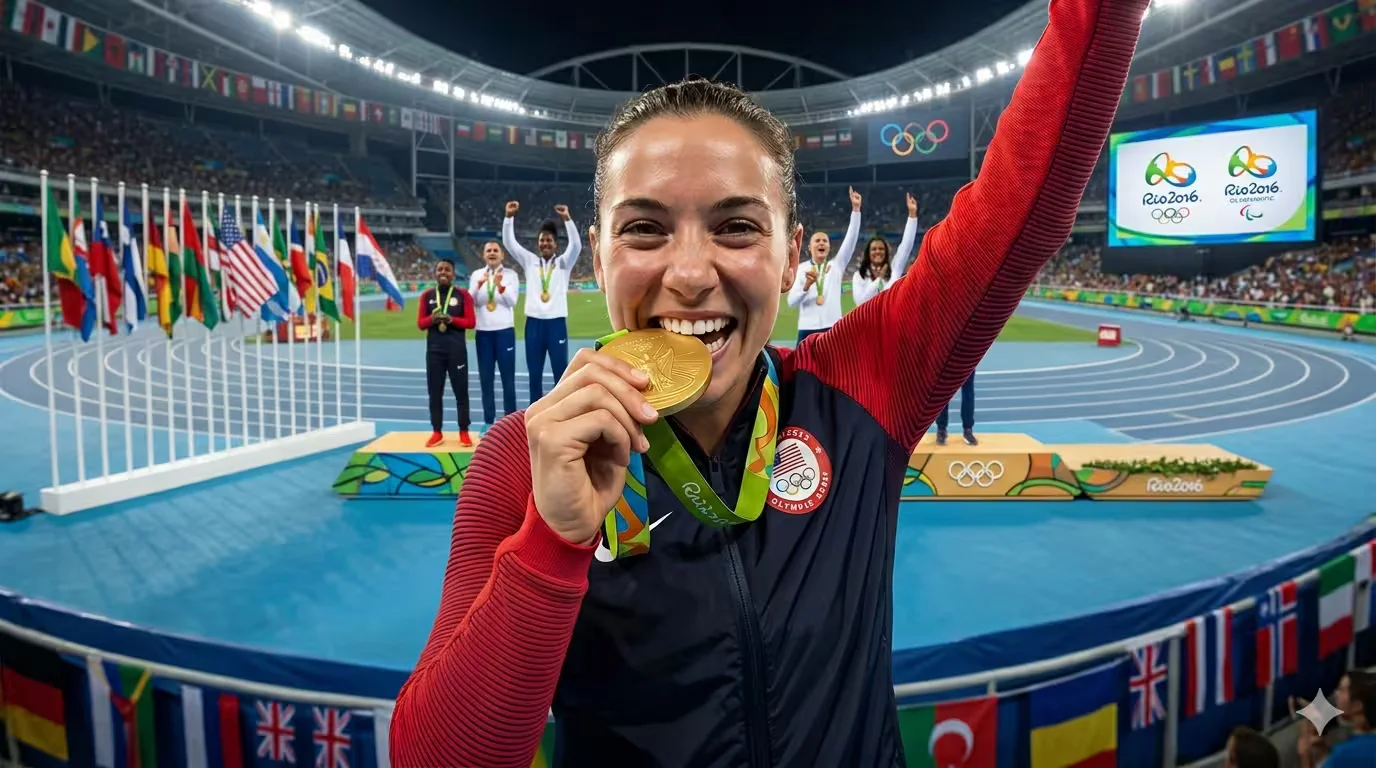
If you watch the podium ceremonies at the Olympic Games, one moment is almost guaranteed to appear in the highlight reels: an athlete, still breathless from the race or match, puts the medal in their mouth and pretends to take a bite. The gesture has become so familiar that it is now a visual shorthand for Olympic success.
But the real reason behind this habit is not what most people think.
The purity‑test myth
The most common story you will hear is that athletes bite their medals the way gold traders once bit gold coins to test their purity. Gold is a relatively soft metal, and because it can dent under pressure, merchants would actually check if a coin was real by biting into it. If it left a mark, the coin was more likely to be genuine rather than a plated or fake copy.
However, this has not applied to Olympic medals for over a century. The International Olympic Committee stopped awarding solid gold medals after the 1912 Games. Today, the “gold” medals are actually made of silver coated with at least six grams of gold, while the “silver” and “bronze” medals are different alloys altogether. In other words, the bite is not necessary to check the medal’s composition.
So why do Olympians still bite?
The photographers’ request
The answer is surprisingly simple: the ritual is driven by photographers, not by chemistry. Many Olympic historians and sports photographers have said that the biting pose is considered one of the most marketable and iconic images of the Games. The image of a victorious athlete with their medal between their teeth is easy to recognise and often lands on the front page of newspapers or the top of social media timelines.
David Wallechinsky, president of the International Society of Olympic Historians, once put it bluntly: “It’s become an obsession with the photographers.” He said that the athletes probably would not do the pose on their own, but they agree when photographers ask for a photo “with the metal in their mouth.”
The pose is treated as a kind of sports shorthand: success, joy, and a touch of fun, all in one frame.
A costly tradition
The tradition can sometimes come at a price. German luger David Möller learned this the hard way after the 2010 Winter Olympics, where he won a silver medal. Möller said photographers specifically asked for a shot of him holding the medal only with his teeth. The pose looked striking for the camera, but later that evening, he discovered that a part of one of his teeth had broken off.
“I noticed a bit of one of my teeth was missing,” he said. The incident became a dark‑humoured reminder that the “bite‑the‑medal” ritual is purely symbolic and not something that actually benefits the athlete.
Why the pose still matters
Although the original reason, testing the gold, has long vanished, the photo itself has become a tradition in its own right. For the global audience, seeing a swimmer, sprinter, or gymnast dramatically “tasting” their hardware adds a touch of lightness and human emotion to the moment of victory.
Experts suggest that the pose will likely survive as long as still photography and newspapers keep it in demand. The Olympic medal bite is therefore not a scientific test, nor a solemn ritual, but a shared, playful understanding between athletes, photographers, and audiences about what an Olympic triumph visually looks like.
In short: Olympic winners bite their medals because everyone wants that one unforgettable front‑page picture, and the Games, in turn, happily oblige.
Tags

SportsLigue